Venerable Lama Karma Namgyel visits May 2013 – UA Mullins Thangka exhibit, Fire Puja, Teachings

Lama Karma Black Hat DanceLama Karma Namgyel will be in Fayetteville from May 3 – June 1.  All events are subject to change.  Watch for updates posted here.

May 3 (Friday).  Lama Karma from the Drukpa Mila Center in Longmont, Colorado arrives in Fayetteville.   Geshe and Lama Karma in Eureka Springs at the Unitarian Universalist Church, 17 Elk St..  Potluck at 6 pm; Lama Karma performs traditional Bhutanese Black Hat Dance at 7 pm.

May 4 (Saturday).  Set up thangka exhibit and artifact display in the Helen Walton Reading Room at the U of A Library, 1 – 6 pm.  Volunteers are welcome, but are requested to respect students studying in the Reading Room.

May 5 (Sunday).  Fire Puja at the Retreat Center from 10 am-5 pm. Potluck lunch at noon, so bring a vegetarian dish to share.

May 11 (Saturday).  Opening Ceremony for the Thangka Exhibit in the U of A Library from 4-6 pm.  Lama Karma will perform the Black Hat Dance, a traditional Bhutanese dance.  Allow for time to park, as it is UA graduation day!

May 13 (Monday).  Tangkha Lecture given by Geshe la in the U of A Library from 6 – 7:30 pm.  Geshe la will discuss the thangkas on exhibit.

May 18 (Saturday).  Thangka Lecture given by Geshe la in the U of A Library from 3 – 5 pm.

May 19 (Sunday).  Geshe la and Lama Karma are teaching at the Unitarian Church in Bentonville at 10:15 am.  Neal will lead meditation at Passages Rising in Fayetteville at 11 am.

May 20 (Monday).  Geshe la leaves for Minnesota to teach at the Wheel of Dharma Center in St. Paul.

May 27 (Monday).  Geshe la returns from Minnesota.

May 29 (Wednesday).  Tsok Offering Ceremony at Geshe’s house from 7 – 8:30 pm.

June 1 (Saturday).  Closing Ceremony for the Thangka Exhibit in the U of A Library. Time TBD.

Posted in Announcements, Meditation & Teaching | Tagged | Comments Off

Tibet in Exile: A Photography Exhibition

TibetinExile


TIBET IN EXILE: A Photographic Exhibition of Tibet’s Refugee Nation
April 4 at 5:30pm until April 7 at 4:00pm
Studio 3 – 3 E. Mountain Street, Fayetteville, Arkansas

University of Arkansas senior Celi Birke photographs the story of Tibetan refugees in India who left everything behind to follow the Dalai Lama into lives of exile.

These photos were taken during the 2011 TEXT Program study abroad trip. This show is the final product of Celi’s honors thesis project.

A portion of sales will go back to the exact locations that were photographed – if you buy a print from the Drepung Loseling Monastery in Goa, the Tibetan Children’s Village in Dharamsala or anywhere else – a donation will be made to them. Win-win!

Posted in Announcements | Comments Off

Photographs of the Fire Puja and Sand Mandala

mandalacloseupTalented local photographer and friend of TCIA, Stephen Ironside, has taken some wonderful photographs of the Yamantaka Fire Puja and Stupa Consecration held March 9, 2013; and the Yamantaka Sand Mandala and Thangka Exhibit, held March 10-17, 2013, at St. Paul’s Episcopal Church. Click the links below to view.

Yamantaka Sand Mandala and Thangka Exhibit

Yamantaka Fire Puja & Groundbreaking and Consecration for Stupa

Posted in Announcements | Comments Off

Yamantaka Sand Mandala and Thangka Exhibit: March 10-17, 2013

YAMANTAKA SAND MANDALA
and Thangka Exhibit

Sunday, March 10, 2:00 pm: Opening Ceremony

March 10-17, 2013
St. Paul’s Episcopal Church
224 N. East Ave., Fayetteville, Arkansas

Sponsored by the Tibetan Cultural Institute of Arkansas,
St. Paul’s Episcopal Church, and University of Arkansas Libraries

Commemorating the Second Anniversary of the Visit of
His Holiness the Dalai Lama of Tibet to Northwest Arkansas
And Dedicated to the Memory of the Over 100 Tibetans Who
Have Sacrificed Their Lives for the Cause of Religious Freedom in Tibet

gyuto monksTibetan Buddhist monks from the Gyuto Tantric Monastery in India will  construct the Yamantaka  sand mandala. The monks are educated  from a young age in Tantric meditation, ritual arts and Buddhist philosophy and are lifetime students and practitioners.

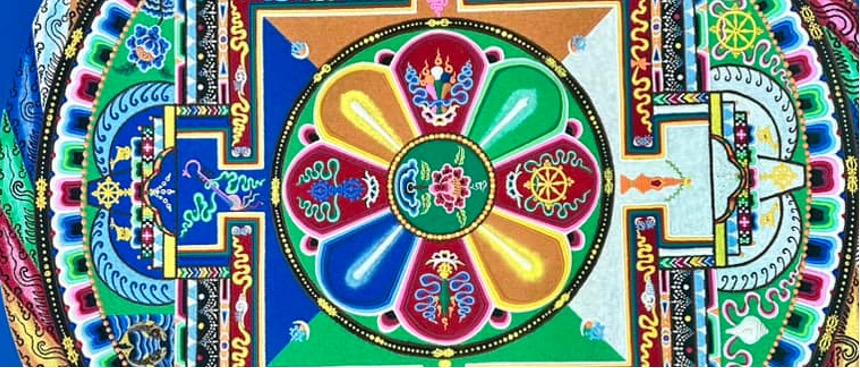
A mandala is a symbol of the pure environment.  It is a diagram whose colors, lines and form all have meaning.  In Buddhism, mandalas are used in sacred ceremonies and meditation, to help people on their journey toward spiritual enlightenment.  Made since ancient times, mandalas can be painted on cloth or carved or created from sand.  All mandalas represent an invitation to enter the Buddha’s awakened mind.

Additional information …

Mandala Schedule of Events

See the complete schedule of events here.

  • Sunday, March 10, 2:00 pm: Opening Ceremony
  • March 11 – 16, 9:00 – 11:00 AM and 2:00 – 5:00 PM: Daily Viewing of Construction
  • Sunday, March 17, 5:00 PM: Closing Ceremony

Continue reading

Posted in Announcements, Education | 2 Comments

About the Stupa

The Tibetan Cultural Institute of Arkansas is happy to announce the construction of a stupa at the site of TCIA’s Land of Infinite Bliss Retreat Center, near Crosses, Arkansas.   Long-time dharma practitioner Geoff Oelsner has agreed to help initiate the stupa project with a generous donation.  You can help, too, by donating to TCIA.  Your contributions will bring immeasurable benefit to many generations of Arkansans and to the land here itself.

The great stupa at Og Min Ogyen Mindroling Monastery in Dehradun, India. Photo by Teemu Kiiski.

The great stupa at Og Min Ogyen Mindroling Monastery in Dehradun, India. Photo by Teemu Kiiski.

A groundbreaking ceremony and fire ritual will be held on Saturday March 9, 2013. All are invited to attend. More details here…

Stupa, or chorten in Tibetan, refers to any of thousands of free-standing monuments that were built throughout Buddhist Asia to house sacred relics, mark holy places, or commemorate events. The first stupas were built in India. Eight hemispherical structures protected the Buddha’s remains and marked and honored the events of his life. Stupas are seen as embodying the essence of the Buddha, symbols of the liberating presence and enlightened mind. Practitioners often circumambulate the stupa, reflecting their desire to emulate the Buddha and accelerate spiritual growth.

The first stupa erected in Tibet was, according to legend, built by Tibetan King Songsten Gompa in the early seventh century CE.  The design of Tibetan stupas evolved to differ radically from their Indian counterparts. The roundness of the Indian style was replaced by vertical height, and a spire made of thirteen discs stacked in decreasing size became the focal point of the monument.

Stupa in front of the Potala Palace in Lhasa, Tibet. Luca Galuzzi - www.galuzzi.it

Stupa in front of the Potala Palace in Lhasa, Tibet. Luca Galuzzi – www.galuzzi.it

As with all things Tibetan, the stupa is ripe with symbolism. The shape of the monument explicitly resembles the body of the Buddha and evokes his physical presence. The base represents his throne; the four steps, his legs crossed in the lotus position; the dome, his torso; the square, his eyes; and the spire, his crown.

The stupa first and foremost represents the enlightened mind. An even more complex symbolism is found on this second level of interpretation. Each of the four steps corresponds to of the four following groups: the perfect abandonments, the four legs of miracles, the five powers, and the four close contemplations. The base then symbolizes the five forces: faith, enthusiastic perseverance, mindfulness, concentration, and wisdom. The dome is the vessel for the seven essential conditions of enlightenment: mindfulness, wisdom, effort, joy, flexibility, concentration, and equanimity. The square platform on top of the stupa, or harmika, symbolizes the eightfold noble path. The first ten discs of the spire correspond to the ten powers of the Buddha: thought, resolved thought, retention, concentration, perfect application, authority, confidence, prayers, great love and compassion, and the blessings of all the Tathagatas. The top three discs correspond to the three close contemplations or mindfulness. At the top of the spire, the sun and moon represent wisdom and method, respectively. The parasol represents compassion and protection.

1000px-Eight_great_stupas.svg

The Eight Great Stupas: styles of Tibetan stupas


Posted in Education | Comments Off

A Brief Introduction to the Tibetan Thangka

18th_century_Eastern_Tibeten_Thanka,_with_the_Green_Tara_(Samaya_Tara_Yogini)_in_the_center_and_the_Blue,_Red,_White_and_Yellow_taras_in_the_corners,_Rubin_Museum_of_ArtA Tibetan thangka, wherever you find one, sets up a portable classroom.  Typically painted on canvas and bordered with a silk frame, the thangka can be rolled, carried over the shoulder, unrolled, and hung on a wall, a tree limb, or anywhere one or more students are gathered together to learn something about Tibetan Buddhist philosophy.

Perfectly suited to a nomadic culture, or a culture forced into exile, thangkas provide a showcase of Tibetan painting that can be packed up and moved at a moment’s notice.

The figures and designs of a Tibetan thangka descend from a highly evolved sacred geometry that the Tibetan thangka painter painstakingly sketches out long before the paint is applied.

Each thangka has a central subject matter, often represented by the central deity, while this central figure is also supplemented and refined by the surrounding figures and symbols.

Tibetan_Thangka,_anonymous,_private_collectionA lama or Geshe educated in the Tibetan tradition can, in fact, teach from a single thangka for weeks, even months, and as a result these unique works of art serve equally well as meditation aids since, as the meditator views them, the fundamental precepts of the philosophy are made manifest in the thangka’s design and figuration.

From the seventh century forward, Tibetans have become known for their concise condensations of Buddhist philosophy into useful, clear, and manageable texts, and the Tibetan thangka, with its visual condensation of the philosophical tradition, certainly belongs to this tradition.

Sidney Burris


17th_century_Central_Tibeten_thanka_of_Guhyasamaja_Akshobhyavajra,_Rubin_Museum_of_Art

Posted in Education | Comments Off

Special thank you for in-kind donations for the thangka exhibit

TCIA recognizes the efforts of our many volunteers who give their time and talent to produce large events such as the visit by the Gyuto monks, sand mandala construction and thangka exhibit next week at St Paul’s.

The thangka exhibit of over twenty paint on silk scrolls is being hung by local set designer and artist, Garret Hunt.  Lunch providers for hanging the thangka exhibit at St. Paul’s, a two-day event, is Twin Kitchen and The Greenhouse Grill.  We appreciate their generous in-kind donation to the program.


Posted in Announcements, Recognition | Tagged | Comments Off

Khenpo Tenzin Thinley – The Six Perfections – Thursday, March 7

The Six Paramitas (Virtues) of Buddhism
Khenpo Tenzin Thinley
Thursday, March 7, 2013
6:30 –8:30 PM
Mojo Hot Yoga Studio 

The Six Paramitas or six virtues in the Buddhist tradition are giving, morality, patience, diligence, meditation and wisdom. Paramita literally means “that which has achieved sufficient perfection to reach the other shore.” The practice of the six paramitas is required for skillfully serving the welfare of others and for the attainment of enlightenment. Khenpo Tenzin will help us to understand their meaning and how to bring these virtuous qualities of our true nature into our everyday life, which requires discipline, practice, and sincere cultivation. Beginners and long-time practitioners will benefit from Khenpo Tenzin’s teaching on the Six Paramitss as he will integrate his own studies and experiences.

Suggested Donation is $15 and for students, $10; no one will be turned away for lack of funds. Donations are for translator expenses and to help support Khenpo Tenzin’s English studies.

Mojo Hot Yoga Studio is at 908 Rolling Hills Dr., Suite #2, just off of North College in Fayetteville, AR. For more information, please call 501-352-0292

Continue reading

Posted in Meditation & Teaching | Comments Off

Tibetan Buddhist Healing Ceremony – March 8 – Eureka Springs

Traditional Tibetan Buddhist Healing Ceremony
By Gyuto Tantric Monks
Friday, March 8 7:00 pm
Eureka Springs Unitarian Universalist Church

gyuto monksTibetan Buddhist Monks from Gyuto Tantric Monastery will perform a traditional healing ceremony at the Unitarian Universalist Church, 17 Elk St. in Eureka Springs on Friday, March 8th at 7:00 PM.

The monks are educated from a young age in Tantric meditation, ritual arts and Buddhist philosophy and are lifetime students and practitioners. They are currently guests of the Tibetan Cultural Institute of Arkansas in Fayetteville where they are creating a Yamantaka Sand Mandala at St. Paul’s Episcopal Church.

Continue reading

Posted in Announcements, Meditation & Teaching | Comments Off

Groundbreaking and Consecration for Stupa and Yamantaka Fire Puja – March 9

March 9, 2013 at The Land of Infinite Bliss Retreat Center

The following activities are designed to consecrate and purify the land upon which the Tibetan Cultural Institute will build a stupa.

2:00 PM: Ground Breaking Ceremony and Consecration for Stupa

Please join us as we break ground and consecrate the land in preparation for the construction of a stupa at the Land of Infinite Bliss Retreat Center.

2:30 PM: Fire Ritual Ceremony

The Yamantaka Fire Puja is a powerful ritual that benefits both the living and those who have passed away. For the living, the puja ceremony fulfills wishes, removes obstacles, improves health, and increases merit and wealth.

Continue reading

Posted in Announcements, Meditation & Teaching | 1 Comment